
A More Refined Form of Platelet Therapy
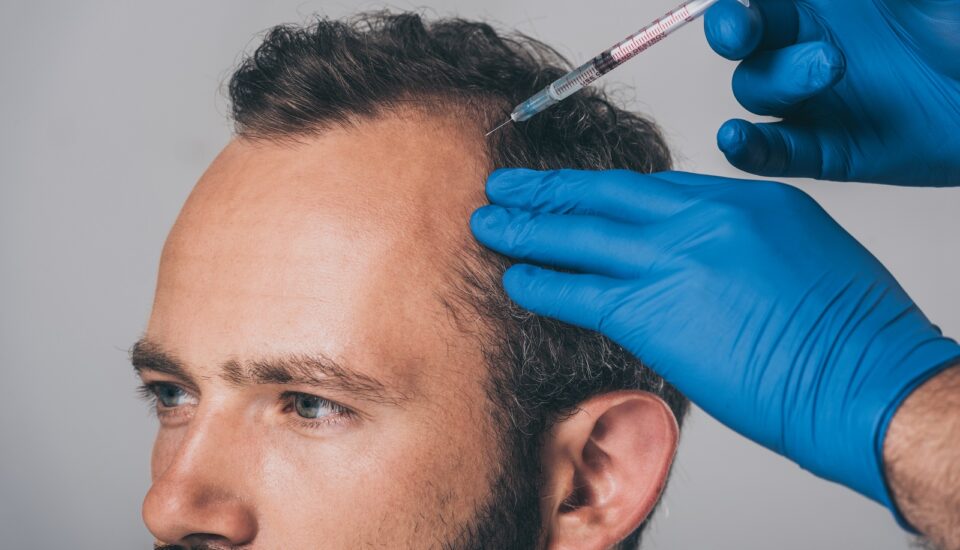
PRGF (Plasma Rich in Growth Factors) represents a more refined evolution of platelet therapy compared with traditional PRP (platelet‑rich plasma). It is designed to deliver growth factors in a controlled and physiologically balanced way, while minimizing inflammatory components.
For many patients experiencing hair thinning, PRGF can be used as part of a comprehensive hair restoration strategy that may include medical therapy, metabolic support, and when appropriate, hair transplantation.
How PRGF Works
Hair follicles are highly active mini‑organs that depend on:
- adequate blood supply
- proper signaling between dermal papilla cells and surrounding tissue
- balanced growth factor activity
- a low inflammatory environment
PRGF works by concentrating the body’s own growth factors from platelets and delivering them directly to the scalp.
These growth factors help support:
- follicular cell activity
- microcirculation around the follicle
- signaling pathways involved in hair growth
- tissue repair in the scalp environment
Unlike many cosmetic approaches that act only superficially, platelet therapies work within the biological environment surrounding the follicle.
What Makes PRGF Different From Traditional PRP
PRGF is derived from the same basic principle as PRP: using the patient’s own blood to concentrate platelets and growth factors. However, the preparation method differs significantly.
PRGF was developed to produce a more controlled and purified preparation.
Key characteristics of PRGF include:
- removal of most inflammatory white blood cells
- controlled platelet concentration
- standardized preparation protocol
- an activation process designed to release growth factors in a physiologically controlled manner
This results in a plasma preparation that is generally considered more biologically stable and less inflammatory.
PRGF vs PRP
Both PRP and PRGF aim to support hair follicles using platelet-derived growth factors. However, the two preparations differ in important ways.
PRP (Platelet-Rich Plasma)
PRP systems vary widely depending on the device and protocol used. Many PRP preparations contain:
- platelets
- plasma proteins
- varying numbers of white blood cells
Because protocols differ, the biological composition of PRP can vary considerably between clinics.
Some PRP preparations may contain inflammatory cells that can trigger additional inflammatory signaling in the scalp.
PRGF (Plasma Rich in Growth Factors)
PRGF focuses on delivering growth factors while minimizing inflammatory elements in the preparation.
Typical characteristics include:
- reduced leukocyte content
- more controlled platelet concentration
- a standardized preparation protocol
The goal is to provide a cleaner and more controlled regenerative signal to the hair follicle environment.
Why We Are Increasingly Moving Toward PRGF
As platelet-based therapies have evolved, many clinicians have moved toward more standardized and biologically controlled preparations.
In clinical practice, PRGF offers several potential advantages:
- a more controlled preparation process
- reduced inflammatory components
- consistent concentration of growth factors
- improved reproducibility between treatments
For these reasons, we increasingly prefer PRGF rather than conventional PRP when platelet therapy is indicated.
It represents a more refined approach to regenerative support of the hair follicle.
When PRGF May Be Helpful
PRGF is not a standalone cure for hair loss. Instead, it is used as a supportive treatment within a broader strategy.
It may be considered in situations such as:
- early androgenetic hair loss
- diffuse thinning
- hair miniaturization
- support after hair transplantation
- patients seeking non‑surgical options
In some patients it is combined with medical treatments, metabolic optimization, or other scalp therapies.
PRGF as Part of a Comprehensive Hair Strategy
Hair loss is rarely caused by a single factor. In many patients, several mechanisms interact:
- genetic sensitivity of the follicle
- hormonal signaling
- oxidative stress
- catabolic physiology (tissue breakdown)
- inflammatory signaling
- metabolic changes and insulin resistance
- nutritional factors
For this reason, treatments aimed at improving the scalp environment should ideally be combined with appropriate medical and systemic evaluation when needed.
PRGF is best understood as one component within a broader physician‑guided hair restoration strategy.
A Physician-Led Approach
The goal of regenerative therapies such as PRGF is not simply to perform a procedure, but to improve the biological environment in which the hair follicle operates.
For this reason, treatment decisions should be individualized based on:
- the pattern of hair loss
- the stage of follicular miniaturization
- the patient’s overall health and metabolic profile
- realistic expectations regarding treatment outcomes
A structured medical evaluation helps determine whether PRGF may play a useful role in a patient’s treatment plan.