

Why Scalp Health Matters
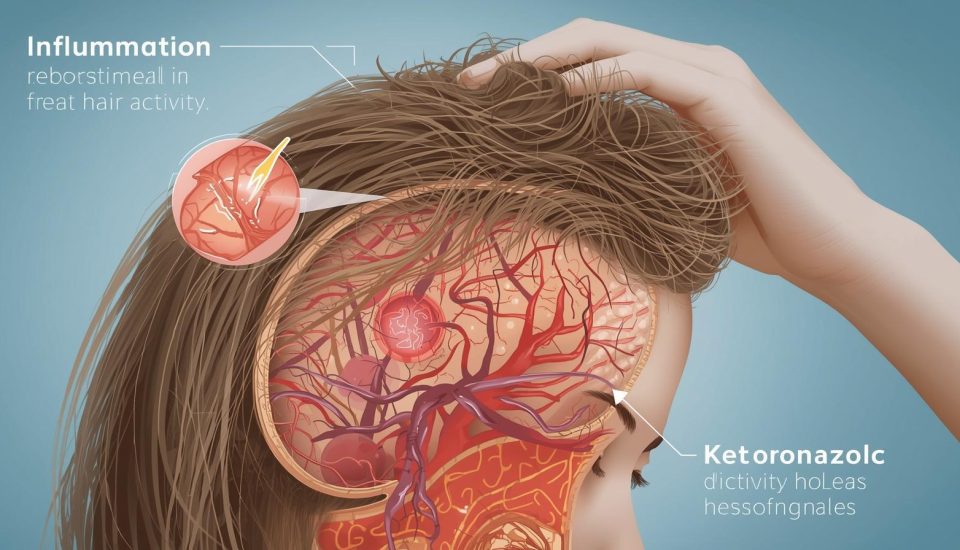
The scalp is a biologically active environment. Chronic inflammation, excess sebum, microbial imbalance, or barrier disruption can impair follicular function and reduce tolerance to other treatments.
While scalp inflammation alone is rarely the sole cause of hair loss, it can:
Exacerbate shedding
- Reduce tolerance to topical therapies
- Contribute to itching, scaling, and irritation
- Interfere with optimal follicular cycling
Addressing scalp pathology is therefore a foundational step, not a standalone cure.
What Is Ketoconazole?
Ketoconazole is an imidazole antifungal agent effective against Malassezia species, commonly implicated in seborrhoeic dermatitis and dandruff.
In hair loss management, ketoconazole may:
- Reduce fungal load on the scalp
- Decrease inflammatory activity
- Improve scalp comfort and barrier function
- Enhance tolerance to other topical treatments
Ketoconazole does not create new hair follicles and does not reverse genetic hair loss.
Potential Mechanisms Relevant to Hair Loss
Beyond antifungal effects, ketoconazole has been shown to:
- Reduce local inflammatory mediators
- Modulate scalp sebum composition
- Exert mild anti-androgenic effects at the scalp level
These mechanisms may indirectly support hair health in susceptible individuals, particularly when seborrhoeic activity or inflammation is present.
When Ketoconazole May Be Helpful
Ketoconazole or related scalp therapies may be considered when:
- Seborrhoeic dermatitis or dandruff is present
- Scalp itching, redness, or scaling is significant
- Tolerance to minoxidil or other topical agents is reduced
- Used as an adjunct to a broader medical or surgical strategy
When Ketoconazole Is Unlikely to Help
Ketoconazole is generally ineffective when:
- Hair loss is driven primarily by advanced androgenetic factors
- There are no signs of scalp inflammation or seborrhoeic activity
- It is used as a substitute for medical or surgical treatment
In such cases, ketoconazole may improve comfort but will not meaningfully alter hair density.
How Ketoconazole Is Typically Used
Ketoconazole is most commonly used as a shampoo, applied intermittently rather than daily.
Typical considerations include:
- Frequency adjusted to individual scalp response
- Avoidance of overuse to prevent irritation
- Combination with gentle, non-medicated shampoos
Long-term daily use is generally discouraged unless specifically indicated.
Ketoconazole Within a Broader Treatment Strategy
Ketoconazole should be viewed as a supportive scalp therapy.
It may:
- Improve the scalp environment
- Enhance tolerance to other treatments
- Reduce inflammatory interference
It does not replace therapies aimed at follicular stimulation, androgen modulation, or surgical restoration.
Frequently Asked Questions
Q1 :Does ketoconazole regrow hair?
No. Ketoconazole does not regrow hair. Its role is to improve scalp health and reduce factors that may worsen shedding or treatment intolerance.
Q2 :Can ketoconazole slow hair loss?
In selected patients with scalp inflammation or seborrhoeic activity, ketoconazole may reduce inflammatory contribution to shedding. It does not stop genetic hair loss.
Q3 :How often should ketoconazole shampoo be used?
Frequency varies. Many patients use it one to two times weekly, adjusted according to scalp response.
Q4 :Can ketoconazole be used with minoxidil?
Yes. Ketoconazole is often used alongside minoxidil to improve scalp tolerance.
Q5 :Are there side effects?
Possible side effects include dryness, irritation, or scalp sensitivity, particularly with overuse.
Q6 :Is ketoconazole suitable for everyone?
No. Suitability depends on scalp condition and individual tolerance. Physician guidance is recommended.
Considering Scalp Therapy?
If scalp symptoms accompany hair loss, a physician-led assessment can help determine whether ketoconazole or other scalp therapies are appropriate.