


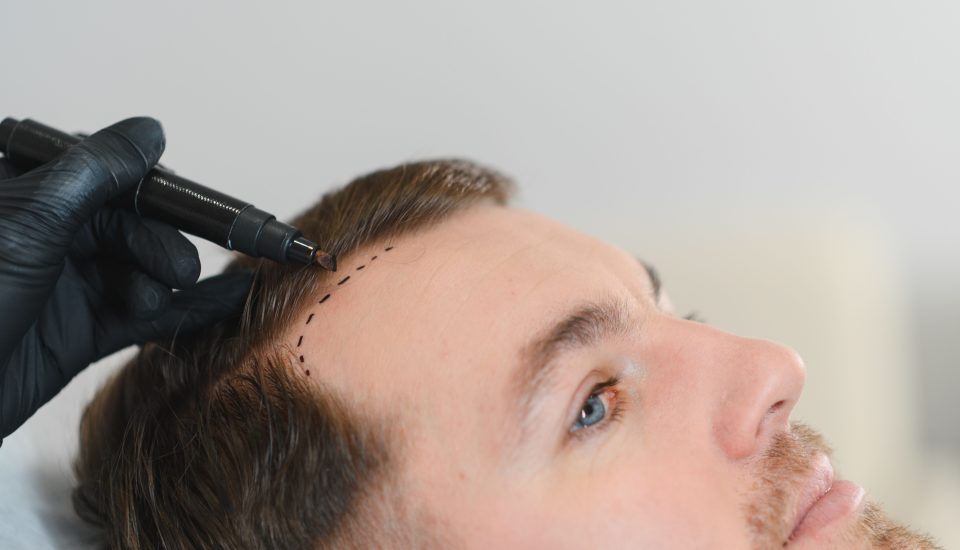
Who Hair Transplantation Is For
Hair transplantation may be appropriate when:
- Hair loss follows a predictable and relatively stable pattern, most commonly androgenetic hair loss
- The donor area is adequate and can safely support transplantation
- Expectations are realistic and aligned with long-term outcomes
- Ongoing or future hair loss is understood and planned for
- Medical factors affecting healing and growth have been addressed
Hair transplantation is not a first-line solution for every patient, and this is stated clearly during assessment.
Situations Requiring Caution or Delay
Surgery may need to be postponed or avoided in cases such as:
- Active inflammatory or scarring alopecia requiring diagnosis and stabilisation
Diffuse thinning without a reliable donor pattern
Rapidly progressive hair loss in younger patients
Uncontrolled metabolic disease or conditions that impair healing
Pressure for aggressive density or unrealistic expectations
In these situations, medical stabilisation or observation is often the safer initial approach.
Our Planning Philosophy
1. Long-Term Strategy First
Planning is based on how hair will age over 5, 10, and 15 years — not only immediate appearance. This includes:
- Anticipating future hair loss
- Conserving donor hair for potential future needs
- Avoiding short-term cosmetic decisions that compromise longevity
2. Natural Design Over Density
- Priority is given to frontal framing and age-appropriate hairline design
- Density is built proportionately rather than maximised
- The goal is a result that appears natural in varied lighting, angles, and over time
3. Donor Preservation
- The donor area is a finite biological resource.
Grafts are harvested conservatively - Extraction patterns preserve donor integrity
- Repeat procedures are considered only when biologically safe
Why Crown Transplantation Is Often Deferred in Younger Patients
The crown behaves differently from the frontal hairline:
- Hair loss in the crown often progresses for many years
- Achieving visible improvement requires significantly more grafts
- Early aggressive crown work risks donor depletion and unnatural patterns later
For many patients under 35–40, a conservative or staged approach is the medically responsible option.
The Surgical Process (High-Level Overview)
Surgical explanations are intentionally clear but non-technical:
- Hair is transferred from permanent donor areas to thinning or balding regions
- The procedure is performed under local anaesthesia
- Careful handling of grafts and tissue supports survival and natural growth
Detailed procedural specifics are discussed during consultation rather than marketed online
Healing, Growth, and Realistic Timelines
- Initial shedding of transplanted hair is expected
- New growth begins gradually over several months
- Visible improvement continues over 9–18 months, sometimes longer
Final outcomes depend on biology, long-term planning, and adherence to guidance. Hair transplantation is a process, not an instant transformation.
What Defines Our Hair Transplantation Approach
- Physician-led decision-making rather than technician-driven models
- Candidacy before commitment — surgery is never automatic
- Long-term planning integrating donor management and future loss
- Clinical hygiene and safety standards aligned with medical practice
- Honest guidance, including when surgery is not the appropriate option
Frequently Asked Questions
Q1 :Why would you ever advise against surgery?
Advising against surgery is part of responsible medical care. We may recommend delaying or avoiding transplantation when the pattern is unstable, the donor area is inadequate, an inflammatory condition is active, or expectations cannot be met safely.
Q2 :Is hair transplantation permanent?
When appropriate donor hair is used, transplanted hair is generally more resistant to androgen-driven loss. Long-term success depends on planning, donor management, and whether ongoing hair loss is stabilised.
Q3 :How many grafts will I need?
This varies widely based on pattern, area, hair characteristics, and long-term planning. Graft numbers are not quoted without proper assessment.
Q4 :Can more than one procedure be performed?
In some patients, additional procedures may be possible. This depends entirely on donor reserves, scalp health, and long-term strategy.
Q5 :Do you guarantee results?
Medicine does not guarantee specific biological outcomes. What we do guarantee is experience, judgement, transparency, and appropriate patient selection.